

The Jeweller's CAD Numbers
The dimensions, clearances and tolerances that decide whether a piece casts and sets. From The CAD/CAM Jeweller, Volume 1.
A render that looks right on screen can still fail on the bench. This is the checklist to run before a file goes to print or to a caster, every figure tied to the book page it comes from.
Get the checklist
Enter your email and the PDF comes straight to your inbox.
The 31 dimensions, clearances and tolerances that decide whether a piece casts and sets, from The CAD/CAM Jeweller.
A one-checklist reference pulled from the published book: every clearance, wall thickness and tolerance a jeweller needs to check before a file goes to print or to a caster.
- ·Ring modelling minimums: sizing area, bridge, shoulders and outer walls
- ·Claw and bezel rules by metal, including the 1.20 mm platinum claw ceiling
- ·Culet clearance and flush-setting rules for secure stone setting
- ·Mould shrinkage and sprue diameter starting points for casting
- ·Print rules: support angle threshold and bridging span without support

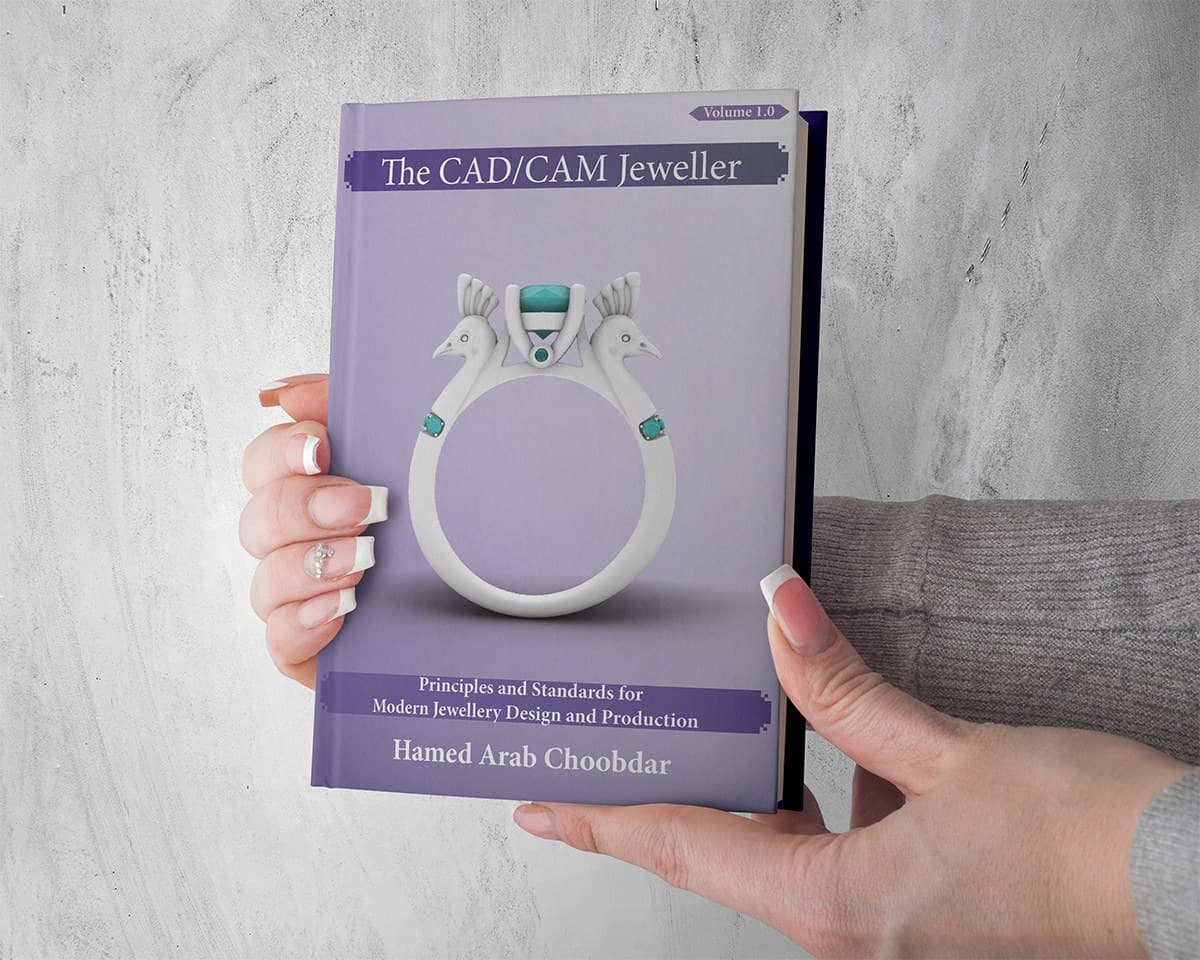
From The CAD/CAM Jeweller, Volume 1.
What is inside
- ✓Ring modelling minimums: sizing area, bridge, shoulders and outer walls
- ✓Claw and bezel rules by metal, including the 1.20 mm platinum claw ceiling
- ✓Culet clearance and flush-setting rules for secure stone setting
- ✓Mould shrinkage and sprue diameter starting points for casting
- ✓Print rules: support angle threshold and bridging span without support
Three of the 31
Finishing loss: ~0.20 mm total on a shank (p.164)
Platinum claw ceiling: 1.20 mm (p.165)
Culet clearance: 0.5 mm minimum (p.193)
When you want the method, not only the numbers: Rhino CAD/CAM training.